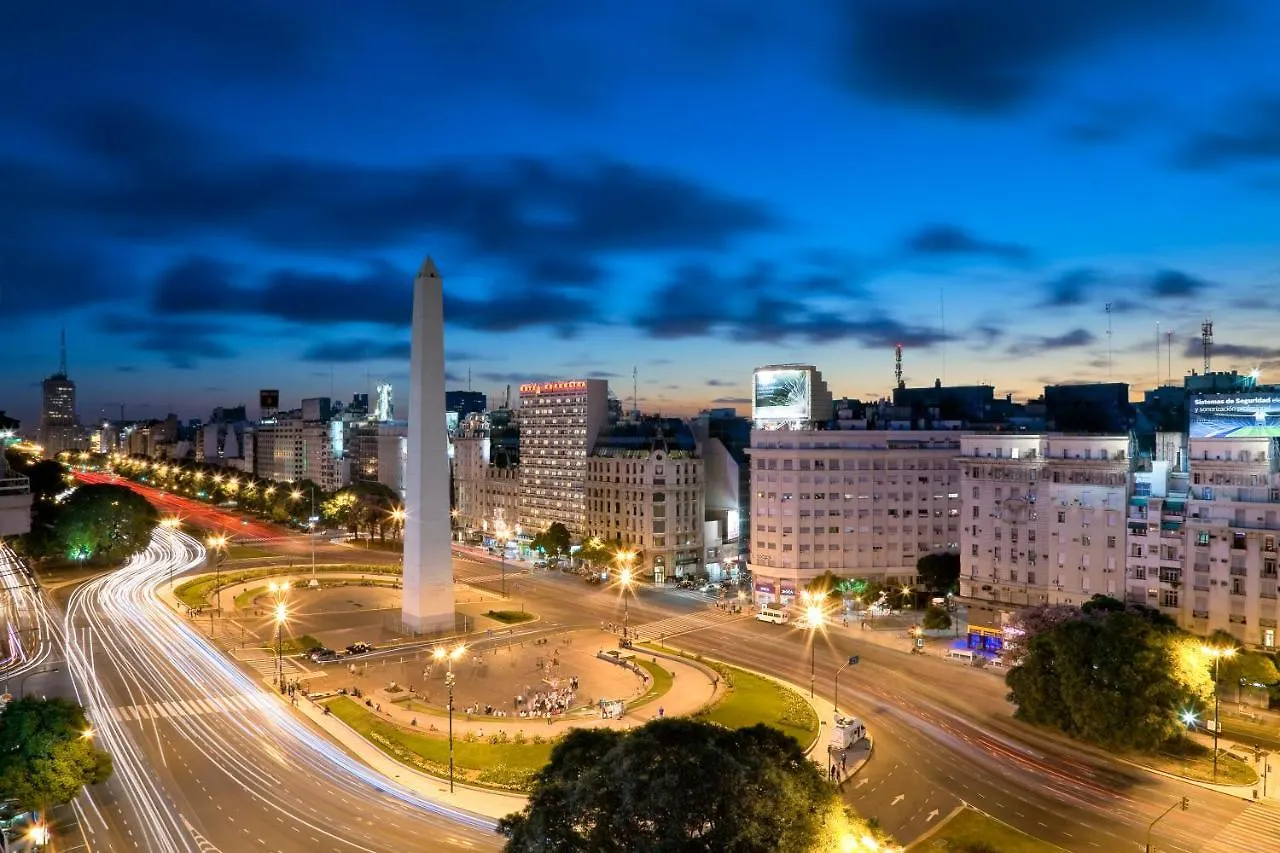
Buenos Aires City Centre sits at the geographic and logistical core of the Argentine capital - home to the Obelisk, 9 de Julio Avenue, Avenida de Mayo, and the Teatro Colón. This guide compares 13 central hotels across different price points and styles, helping you decide which property matches your itinerary, budget, and expectations before you commit to a booking.
What It's Like Staying In Buenos Aires City Centre
The City Centre - locally called Microcentro or Centro - puts you within walking distance of the city's most visited landmarks, but that convenience comes with a specific urban rhythm. Weekdays are dense with commuters, street vendors, and office traffic, particularly along Florida Street and Corrientes Avenue; the energy shifts sharply on evenings and weekends when the business crowd clears out, leaving quieter but less animated streets. Travelers who benefit most from staying here are those on short stays of around 2 nights who want fast, walkable access to historic sites without relying on taxis or the Subte metro.
Those planning a deeper Buenos Aires experience - tango bars in San Telmo, weekend brunches in Palermo, evening walks in Recoleta - may find the Centre feels like a transit hub rather than a neighborhood.
Pros:
- * Walking distance to the Obelisk, Teatro Colón, Casa Rosada, and Plaza de Mayo without needing public transport
- * Dense Subte connections (Lines A, B, C, D, and E all converge here) reduce commute times to any district
- * Wide hotel supply at multiple price tiers keeps nightly rates competitive compared to Recoleta or Palermo
Cons:
- * Street noise from 9 de Julio Avenue and Corrientes is constant; rooms without soundproofing are noticeably affected
- * The neighbourhood empties out after 9 PM on weekdays, limiting dining and nightlife options within walking distance
- * Petty theft - pickpocketing and bag snatching - is more common here than in Palermo or Recoleta, requiring standard urban vigilance
Why Choose Central Hotels In Buenos Aires City Centre
Central hotels in Buenos Aires City Centre range from no-frills 3-star properties to full-service 4-star options with rooftop pools and spa facilities - and the price gap between those tiers is significant. A mid-range double room in the Centre typically costs around 30% less per night than a comparable room in Recoleta, making it the most accessible district for travellers who prioritise location over neighbourhood atmosphere. Room sizes at the Centre's standard hotels are generally compact - around 20 to 25 square metres for entry-level doubles - though business-class and superior rooms tend to offer more space and often include city or Obelisk views that add real visual value.
The main trade-off is noise: properties directly on 9 de Julio Avenue or Corrientes face significant street-level sound, and soundproofed rooms become a booking priority rather than a luxury. Hotels one or two blocks off the main avenues offer a noticeably quieter experience without sacrificing walkability.
Pros:
- * Rooftop pools, fitness centres, and spa facilities available at multiple hotels without the Recoleta premium pricing
- * Business amenities - meeting rooms, business centres, express check-in - are standard across most Centre hotels, useful for work-trip travellers
- * Airport shuttle services offered by several properties, connecting directly to Jorge Newbery Airfield just around 6 km away
Cons:
- * Entry-level rooms in central properties tend to be smaller than equivalent-priced rooms in Palermo or San Telmo boutique hotels
- * Several hotel restaurants in the area cater to business lunch crowds and may feel generic for evening dining
- * Weekend atmosphere around most Centre hotels is noticeably flat compared to Palermo or Recoleta on Saturday nights
Practical Booking & Area Strategy
For the best micro-location within Buenos Aires City Centre, properties on or within two blocks of 9 de Julio Avenue give the fastest pedestrian access to the Obelisk, while streets parallel to Corrientes - such as Lavalle or Tucumán - offer slightly quieter positioning. The Subte Line C station at 9 de Julio connects the Centre to Retiro train station in under 5 minutes, making it straightforward to reach the airport bus terminal or the northern neighbourhoods. Line A along Avenida de Mayo reaches San Telmo in around 3 stops, so you're never far from the city's most atmospheric districts even if you base yourself downtown.
For things to do directly from a Centre hotel: the Teatro Colón, Café Tortoni, Casa Rosada, Puerto Madero, and the San Martín Cultural Centre are all reachable on foot - most within a 15-minute walk. Peak booking season runs from late November through February (southern summer), when rates climb and availability tightens; booking at least 6 weeks ahead during that window is practical advice. The shoulder seasons of April-June and September-November offer the most favourable combination of mild weather, thinner crowds, and competitive nightly rates.
Best Value Stays
These properties deliver solid central positioning and functional amenities at the most accessible price points in the area - a practical base for sightseeing-focused stays.
-
1. Globales Republica
Show on map


Hurry – almost gone at this price!
fromUS$ 51
-
2. Bristol Hotel
Show on map


Best price guarantee
fromUS$ 29
-
3. Merit San Telmo By Amerian
Show on map


Best price guarantee
fromUS$ 67
-
4. Grand King Hotel
Show on map


Just a few rooms left at the best rate!
fromUS$ 42
-
5. Alquileres Temporarios By Clh Rentals
Show on map


Best price guarantee
fromUS$ 42
Best Mid-Range Picks
These properties add meaningful amenities - rooftop pools, spa facilities, business-grade services, and branded hospitality - while remaining competitive within the Centro's mid-tier pricing.
-
6. Huinid Obelisco Hotel
Show on map


Hurry – almost gone at this price!
fromUS$ 103
-
7. Eurobuilding Hotel Boutique Buenos Aires
Show on map


Rooms filling fast – secure the best rate!
fromUS$ 81
-
8. Nh Buenos Aires 9 De Julio
Show on map


Rooms filling fast – secure the best rate!
fromUS$ 63
-
9. Esplendor By Wyndham Buenos Aires Tango
Show on map


Rooms filling fast – secure the best rate!
fromUS$ 83
Best Premium Stays
These properties lead the selection in facilities, room quality, and positioning - offering full-service hospitality with spa, pool, and dining at the upper end of the Centro's hotel market.
-
10. Hotel Grand Brizo Buenos Aires
Show on map


Just a few rooms left at the best rate!
fromUS$ 80
-
11. Emperador Hotel Buenos Aires
Show on map


Hurry – almost gone at this price!
fromUS$ 137
-
12. Casasur Recoleta
Show on map


Just a few rooms left at the best rate!
fromUS$ 200
When to Book & How Many Nights Make Sense
Buenos Aires City Centre works best as a base for stays of around 3 nights - long enough to cover the walkable landmark circuit (Obelisk, Casa Rosada, Teatro Colón, Café Tortoni, Puerto Madero) without the neighbourhood's limited evening atmosphere becoming a drawback. The shoulder seasons of April to June and September to November consistently offer the best combination of mild temperatures, manageable crowds, and competitive hotel rates; peak tourist season runs from late November through February, when rates in the Centre rise noticeably and availability at mid-range and premium properties tightens. Booking at least 6 weeks ahead for peak-season travel is the practical threshold for securing preferred room categories at the better-positioned hotels on and around 9 de Julio Avenue. Last-minute bookings in the Centre are more viable during July - a quieter local holiday month - and in March, when post-summer demand drops before the autumn shoulder season begins.